Modern warehouses are under constant pressure to process more orders, reduce costs, and meet shorter delivery expectations. As supply chains become increasingly complex, businesses are turning to automation to improve efficiency without sacrificing accuracy or flexibility. One of the most impactful advancements driving this shift is robotics in material handling, which is redefining how products move through distribution centers and manufacturing facilities.
From transporting inventory to supporting order fulfillment, robotic technologies help companies streamline workflows, minimize repetitive tasks, and create safer work environments. Rather than replacing employees, these solutions allow teams to focus on higher-value responsibilities while automation handles time-consuming and physically demanding processes.
Why robotics in material handling is becoming essential
Robotics in material handling refers to the use of automated systems that transport, store, retrieve, sort, and manage materials throughout a warehouse or production facility. These technologies include autonomous mobile robots (AMRs), automated guided vehicles (AGVs), robotic arms, conveyor systems, and other intelligent solutions designed to improve operational performance.
Unlike traditional material handling methods that depend heavily on manual labor, robotic systems can perform repetitive tasks with exceptional consistency and precision. As a result, businesses experience faster workflows, improved inventory accuracy, and greater operational visibility across their facilities.
The demand for robotics in material handling continues to grow as companies look for ways to adapt to changing customer expectations while remaining competitive in an increasingly automated industry.
The technologies reshaping warehouse operations
Warehouse automation has accelerated rapidly over the last several years. The growth of e-commerce, labor shortages, and increasing order volumes have encouraged businesses to invest in smarter technologies that can scale alongside demand.
Today, robotics is no longer reserved for large corporations. Companies of all sizes are implementing robotic solutions to improve inventory management, optimize warehouse layouts, and reduce unnecessary travel time within their facilities.
Advanced software, artificial intelligence, and real-time data analytics allow these robotic systems to make intelligent decisions, respond to changing warehouse conditions, and collaborate with employees more efficiently than ever before.

How automation improves warehouse performance
Automation delivers benefits that extend well beyond increasing speed. Implementing robotics helps organizations create more reliable, flexible, and scalable operations that can adapt as business needs evolve.
Some of the biggest advantages include:
- Faster product movement throughout the warehouse.
- Improved inventory accuracy.
- Reduced operational bottlenecks.
- Better space utilization.
- Increased throughput during peak demand.
- Greater consistency across daily operations.
These improvements allow businesses to maintain high service levels while controlling operating expenses and preparing for future growth.
Benefits of robotics in material handling
Faster operations without sacrificing accuracy
One of the primary reasons companies invest in robotics is the ability to increase productivity while maintaining consistent performance. Automated systems can move products continuously without fatigue, allowing warehouses to process more inventory in less time.
Because robotic systems follow programmed workflows and real-time navigation data, they also reduce delays that commonly occur with manual transportation methods. This leads to faster order fulfillment, shorter processing times, and more predictable warehouse performance.
Reducing errors across daily operations
Manual material handling often introduces mistakes such as misplaced inventory, incorrect picks, or shipping errors. These issues can increase operating costs while negatively affecting customer satisfaction.
With robotics, many repetitive tasks become standardized and highly accurate. Automated systems help ensure products arrive at the correct destination, inventory records remain up to date, and warehouse workflows become more reliable.
The result is better operational consistency and fewer costly disruptions throughout the supply chain.
Lower operating costs over time
Although implementing robotics in material handling requires an upfront investment, many businesses recover those costs through higher productivity and lower operating expenses. Automated systems can operate around the clock, reduce downtime, and improve resource utilization, creating measurable savings over time.
Labor costs often decrease as employees shift from repetitive transportation tasks to responsibilities that require problem-solving, quality control, and operational oversight. Instead of replacing workers, automation allows organizations to use their workforce more efficiently.
In addition, robotics in material handling helps minimize product damage, improve inventory control, and optimize warehouse space, all of which contribute to stronger long-term financial performance.
Creating a safer workplace
Warehouse environments involve repetitive lifting, heavy loads, and constant equipment movement, all of which increase the risk of workplace injuries. Automation helps reduce these risks by assigning physically demanding or hazardous tasks to robotic systems.
As businesses adopt robotics in material handling, employees spend less time performing repetitive movements that can lead to fatigue or musculoskeletal injuries. This creates a safer work environment while improving employee satisfaction and reducing costly downtime caused by workplace accidents.
Many organizations also report improved retention because employees can focus on more engaging responsibilities rather than repetitive manual transportation tasks.
Robotics solutions driving warehouse automation
Automated guided vehicles (AGVs)
Automated Guided Vehicles, commonly known as AGVs, have been a trusted warehouse automation solution for decades. These vehicles follow predefined routes using magnetic strips, lasers, or navigation markers to transport materials throughout a facility.
AGVs are commonly used for:
- Moving pallets between storage areas.
- Transporting raw materials to production lines.
- Delivering finished goods to shipping stations.
- Supporting repetitive transportation tasks.
For warehouses with consistent workflows and fixed travel paths, AGVs remain an effective solution within a broader robotics in material handling strategy.
Autonomous mobile robots (AMRs)
Unlike AGVs, Autonomous Mobile Robots use intelligent navigation systems, sensors, cameras, and artificial intelligence to move independently throughout a warehouse. Instead of following fixed routes, AMRs continuously analyze their surroundings and select the most efficient path while safely avoiding people, equipment, and unexpected obstacles.
This flexibility makes AMRs an increasingly popular choice for businesses looking to modernize their operations without making extensive facility modifications.
Applications for AMRs include:
- Order picking support.
- Inventory transport.
- Goods-to-person workflows.
- Cross-warehouse deliveries.
- Production line replenishment.
As more companies embrace robotics in material handling, AMRs have become one of the fastest-growing technologies because they easily adapt to changing warehouse layouts and fluctuating production demands.
Robotic arms for precision tasks
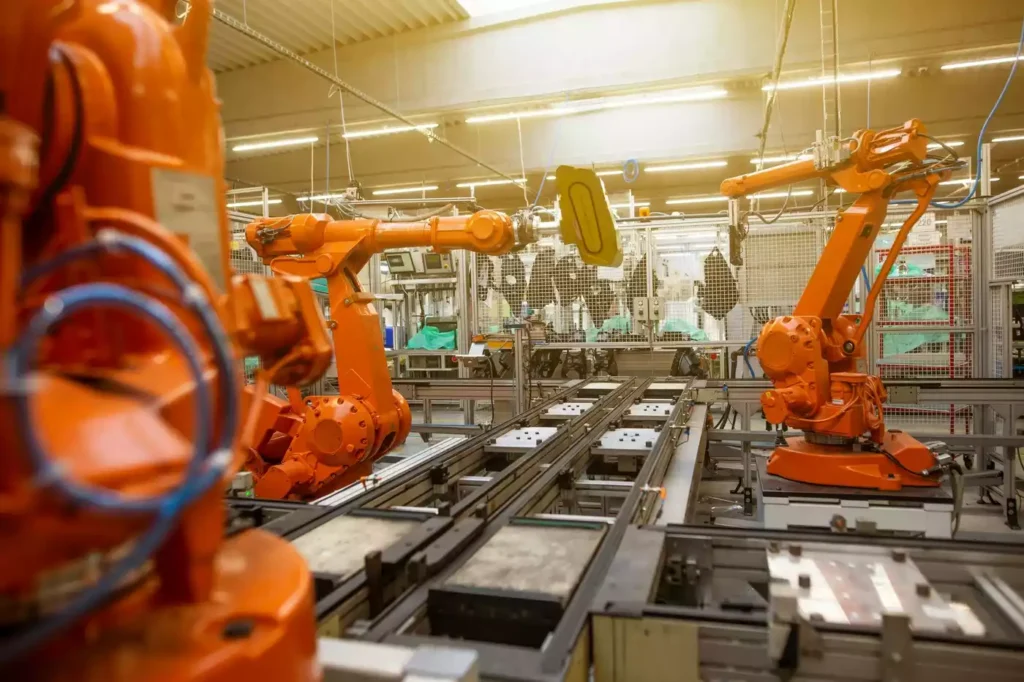
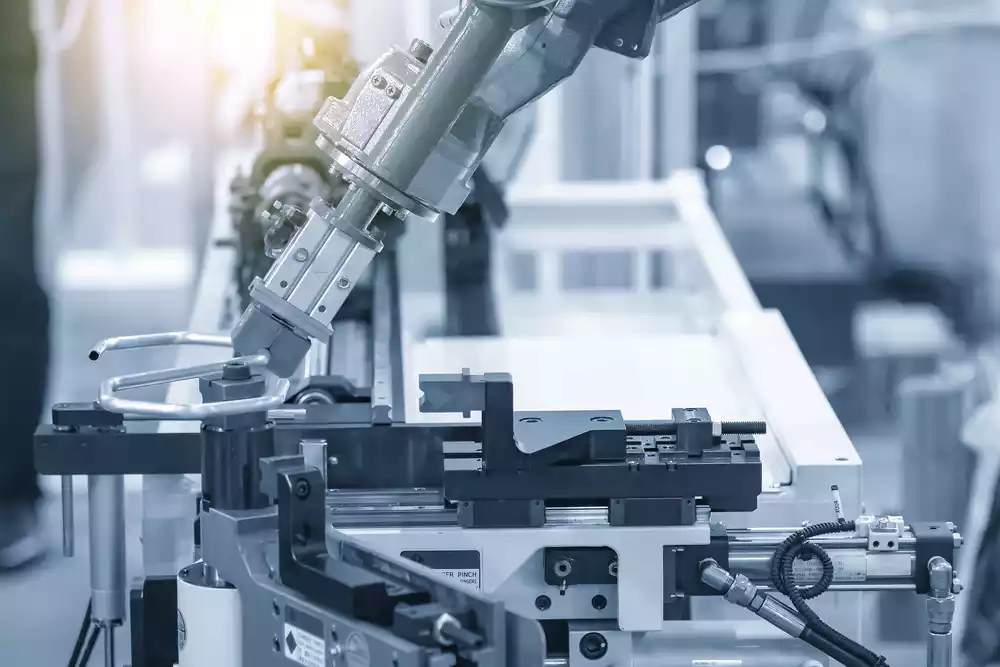
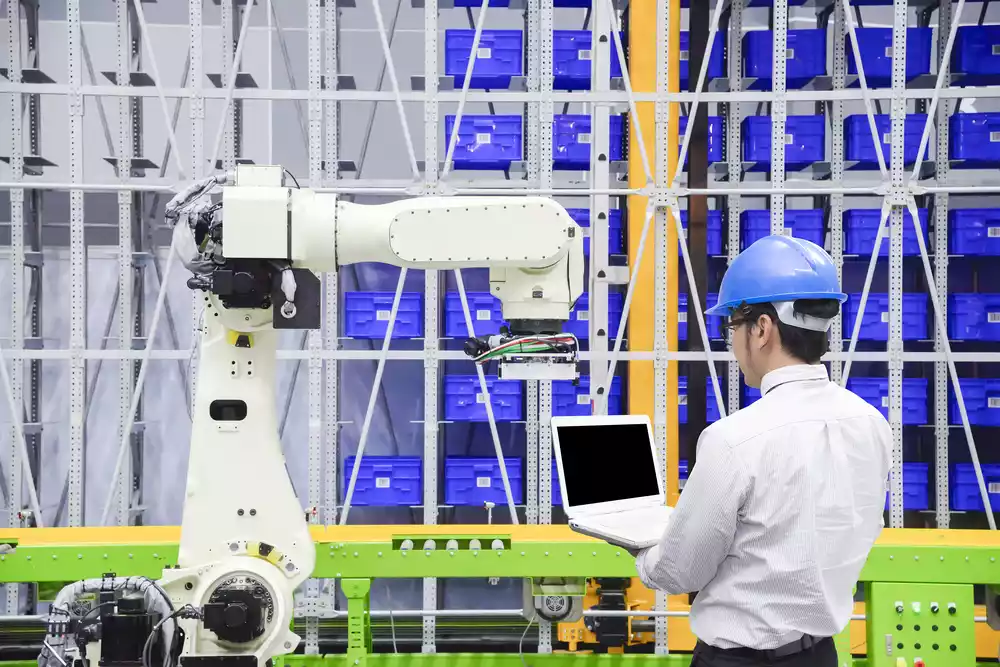
Robotic arms continue to play an essential role in robotics in material handling, particularly in environments where repetitive precision is critical.
Modern robotic arms can perform tasks such as:
- Picking and placing products.
- Palletizing and depalletizing.
- Packaging.
- Sorting products.
- Machine tending.
Advances in machine vision and artificial intelligence have made robotic arms capable of handling products with different sizes, shapes, and packaging configurations, allowing warehouses to automate increasingly complex processes.
Many companies integrate robotic arms directly with Warehouse Management Systems (WMS), creating seamless communication between inventory data and warehouse operations.
Drones for inventory management
Inventory counting is often one of the most time-consuming warehouse activities. Drones provide a faster alternative by scanning storage locations from above while collecting real-time inventory data.
As part of a comprehensive robotics in material handling strategy, drones help businesses:
- Perform inventory audits faster.
- Improve stock accuracy.
- Reduce manual counting.
- Access high storage locations safely.
- Minimize warehouse disruptions.
Some companies have reduced inventory counting times by more than 80% after incorporating drones into their warehouse operations, allowing employees to focus on tasks that require human expertise.
The future of robotics in material handling
Artificial intelligence will continue driving innovation
Artificial intelligence is making robotic systems smarter and more adaptable. Instead of simply following programmed instructions, modern robots can analyze warehouse conditions, optimize routes, and make decisions in real time.
As AI capabilities continue to evolve, robotics in material handling will become even more efficient by improving inventory movement, reducing congestion, and adapting to changing production demands with minimal human intervention.
Human-robot collaboration is becoming the standard
Rather than replacing warehouse employees, modern automation is designed to support them. Collaborative workflows allow people and robots to work together, combining human decision-making with robotic speed and precision.
This approach improves productivity while creating safer and more efficient workplaces, making automation an increasingly valuable investment for companies facing labor shortages and growing customer expectations.
Sustainability is shaping warehouse automation
Sustainability has become an important factor in warehouse operations. Many robotic systems consume less energy than traditional equipment while optimizing transportation routes and reducing unnecessary product movement.
By implementing robotics in material handling, businesses can improve resource utilization, minimize waste, and support environmental goals without sacrificing operational performance.
Preparing your warehouse for the next generation of automation
Warehouse automation is no longer a competitive advantage reserved for large enterprises, it’s becoming an essential strategy for businesses that want to improve efficiency, increase accuracy, and remain competitive in rapidly changing markets. Investing in robotics in material handling allows organizations to build more agile operations capable of adapting to future growth while improving safety and reducing operating costs.
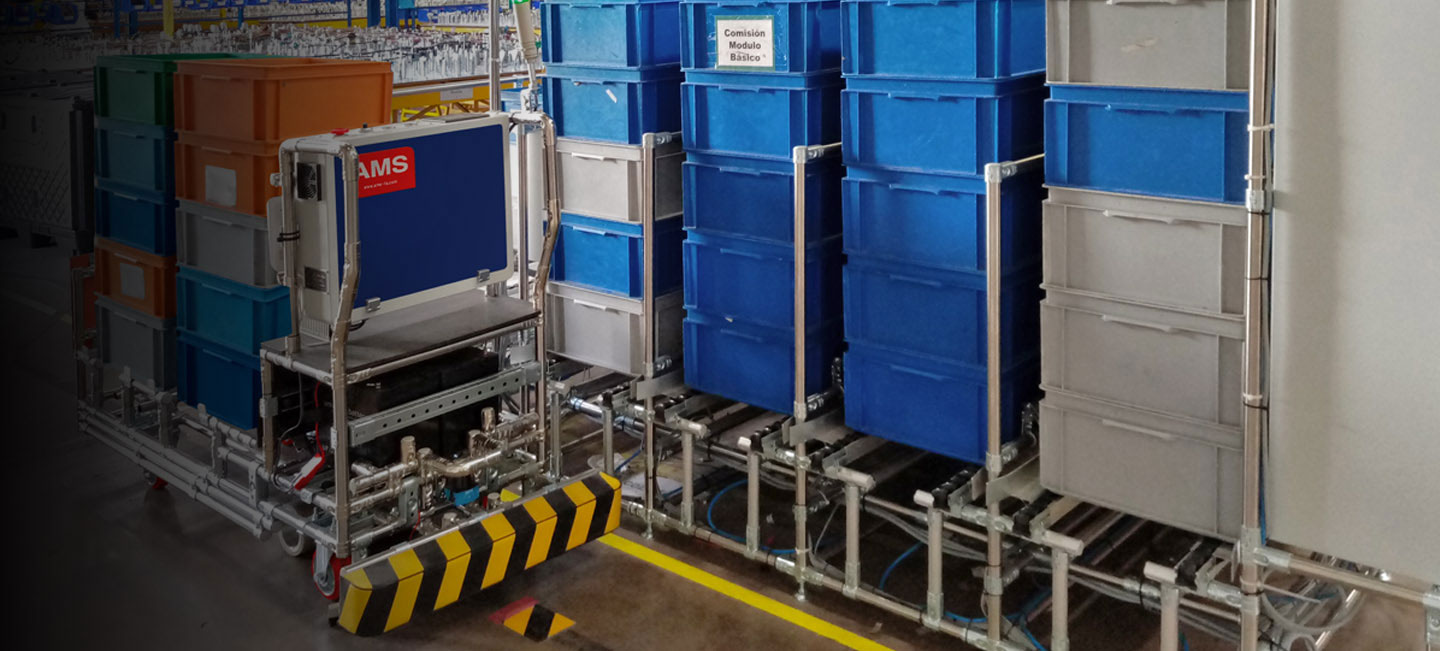
For companies looking to take the next step, choosing the right automation partner is just as important as selecting the right technology. AMS, Inc. provides advanced AMR robots designed to optimize material movement, improve warehouse productivity, and integrate seamlessly with existing operations. Whether you’re beginning your automation journey or expanding an established system, our team helps identify solutions tailored to your workflow so you can maximize the benefits of warehouse automation with confidence.