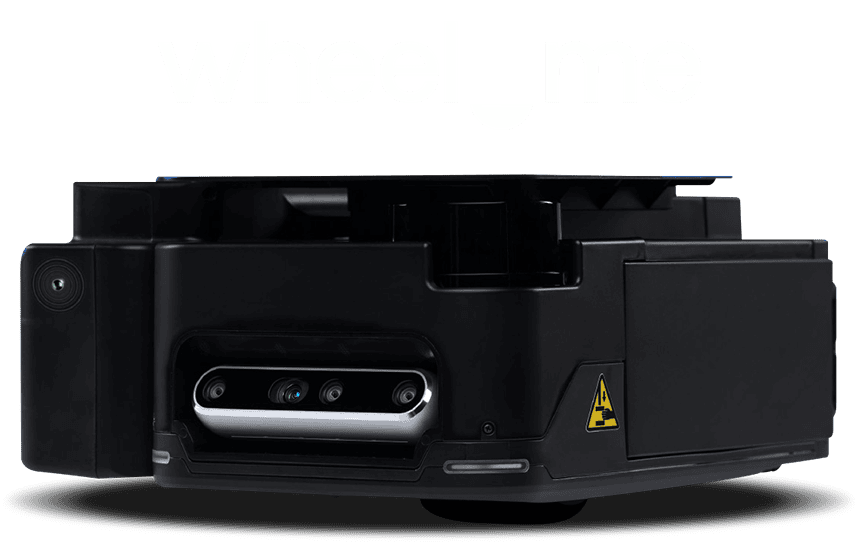
AMR Robots

AMR’s offer excellent flexibility and accuracy over traditional AGV’s and keep your maintenance costs in check. While still a popular option, AGV’s are on a decline due to an impressive surge of autonomous robotic demand.

Which AMR do you need?

Find out what our AMR robots can do for your business below, or contact us for more details.

Featured robot

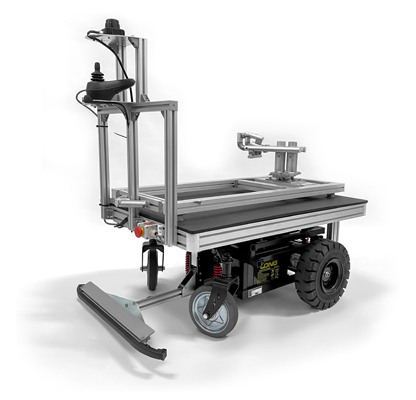
Wheel.me is a cost-effective alternative to complex, expensive AMRs—no heavy engineering, no oversized investment. Just fast, flexible automation.

  • DIY

  • Adapts to any shape

  • Light-duty

Follow Me Robot

Follow me Robot AMR

The Follow Me Robot is ideal for both indoor and outdoor environments without rails. High logistic efficiency is possible without additional devices.

View Details

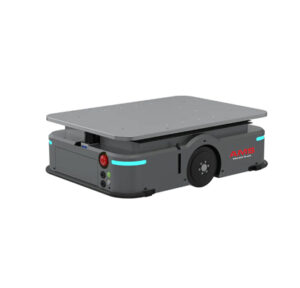
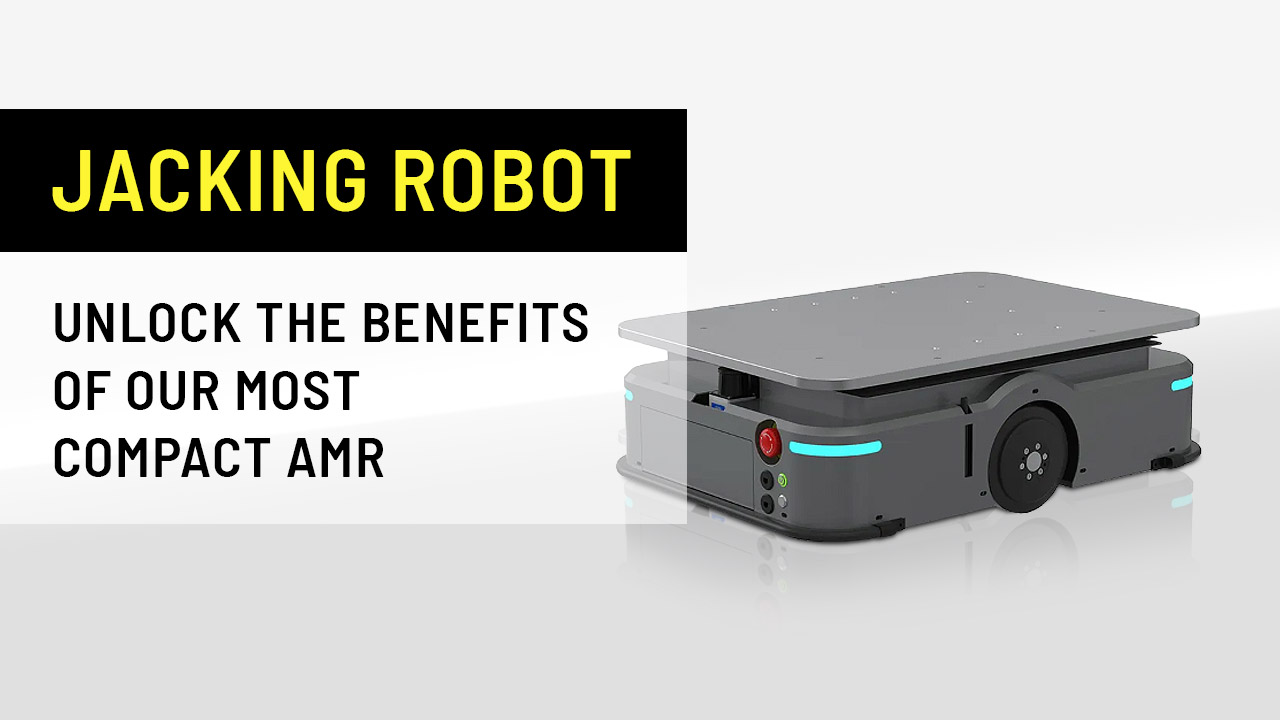
Jacking Robot

jacking amr 300jz

The Lifting Robot, or Jacking Robot, is a smart mobile robot that transports goods quickly and safely through indoor factories, hotels, and hospitals.

View Details

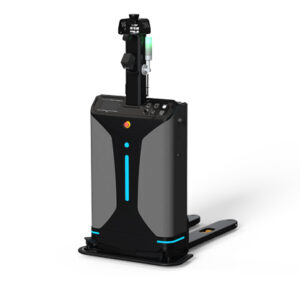
Pallet Stacker Robot

pallet stacker amr

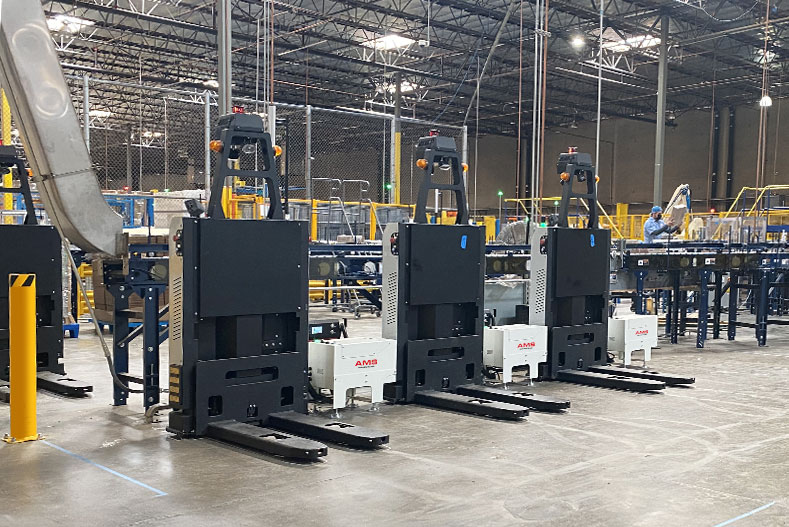
The Pallet stacker is a formidable pallet stacker and transporter. Boasting plenty of power and precision for a variety of applications.

View Details
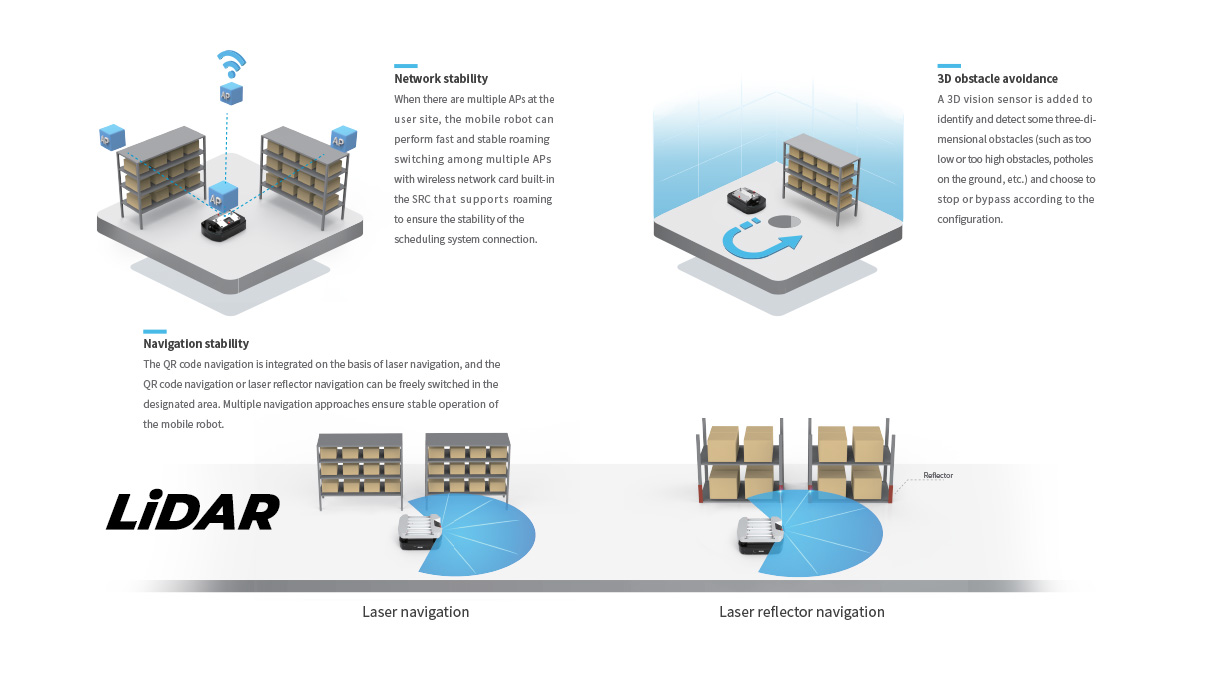

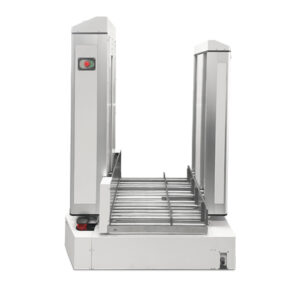
Hybrid Robots

SMART AMR webimg

The Pallet stacker is a formidable pallet stacker and transporter. Boasting plenty of power and precision for a variety of applications.

View Details
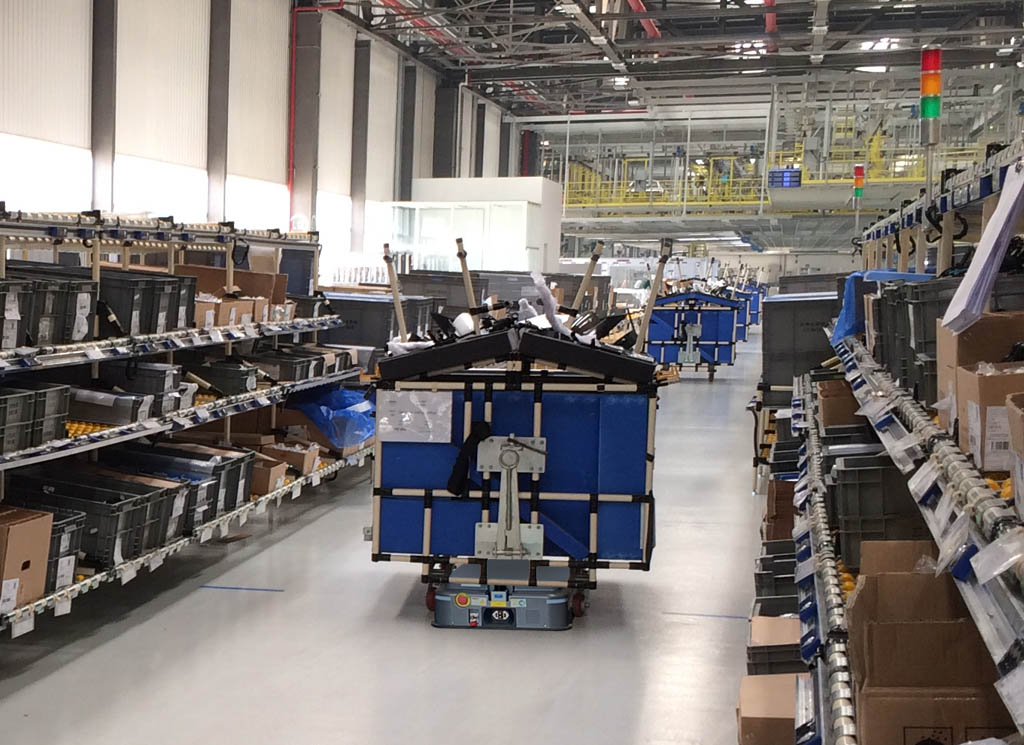
A new era of factory improvement

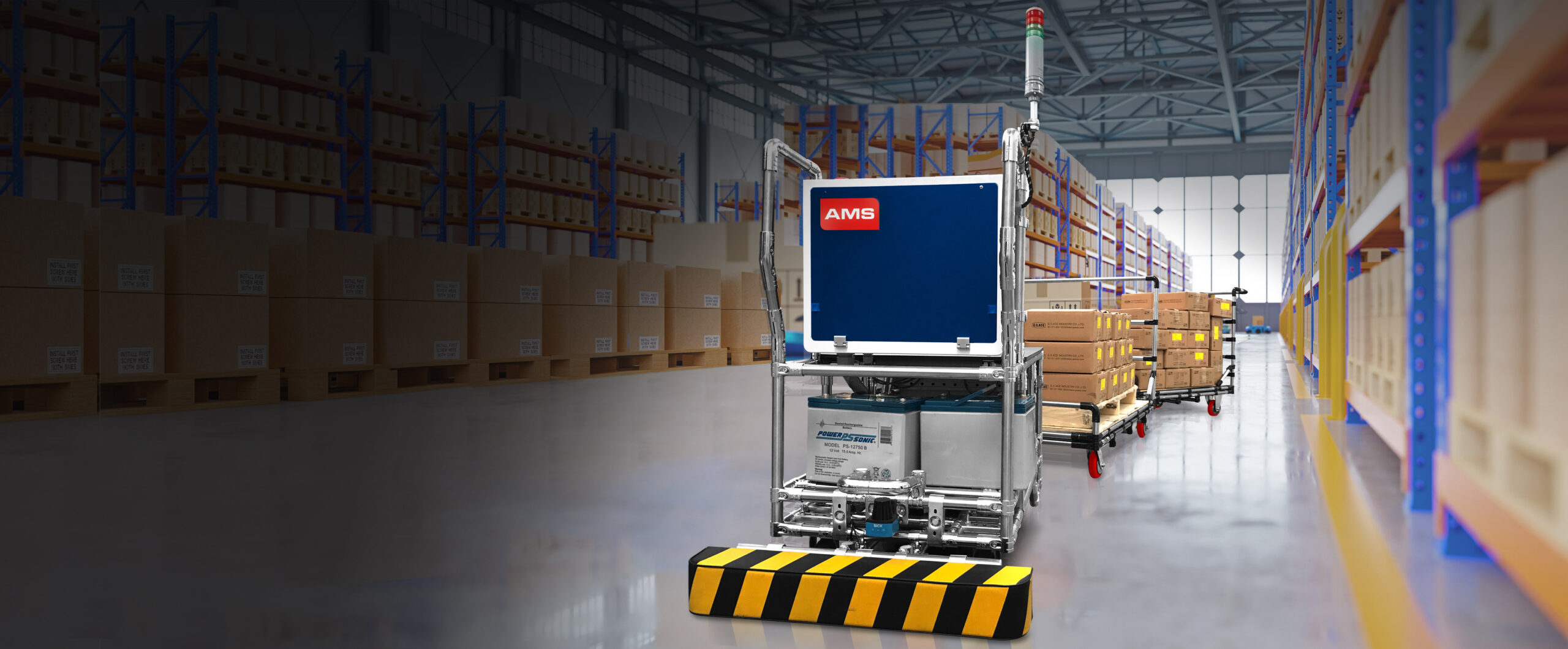
The AMR uses built-in sensors and cameras and sophisticated software to identify the surrounding environment and take the most efficient route to its destination, safely avoiding obstacles and people, eliminating the need to install or modify expensive auxiliary facilities for sensing. With unparalleled flexibility and smart technology, it automates almost any situation when an employee pushes or delivers a cart, freeing them to focus on other tasks.

Stable navigation for safety and reliability

features graphic 1

Take the lead with automated production

Robotics and manufacturing are a natural partnership. Robotics play a major role in the manufacturing landscape today. Automated manufacturing solutions should be a key part of any operation that strives for maximum efficiency, safety and competitive advantage in the market. Manufacturing robots automate repetitive tasks, reduce margins of error to negligible rates, and enable human workers to focus on more productive areas of the operation.

user friendly automated systems 1

Everyone can use robots

Robots are finding more roles in small to medium-sized operations. Any repetitive task is a candidate for robotic manufacturing, especially if it’s difficult or dangerous for a human, or takes place in a hostile environment.

inventory pick and drop

Revolutionize your assembly line

Moving quickly and accurately, robots handle parts too small for human eyes and fingers and never make mistakes. That’s one reason growing numbers of products are designed for robotic assembly from the outset.

Why use autonomous technology?

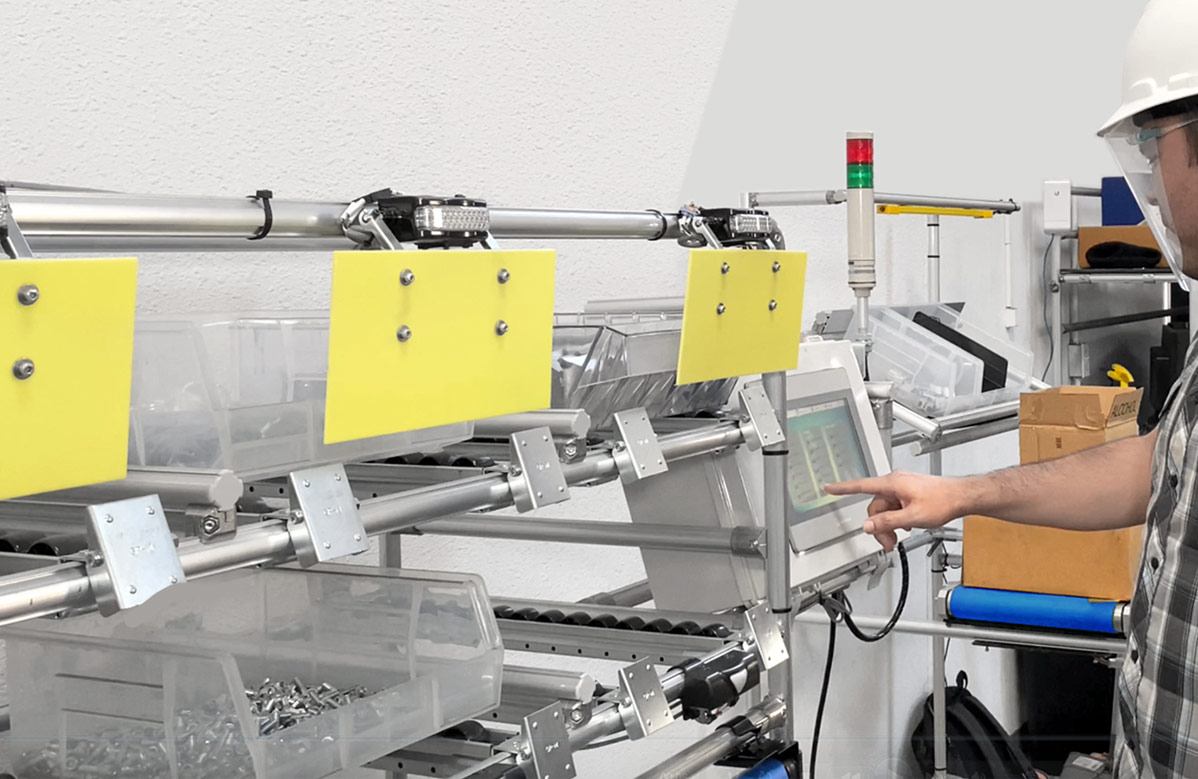
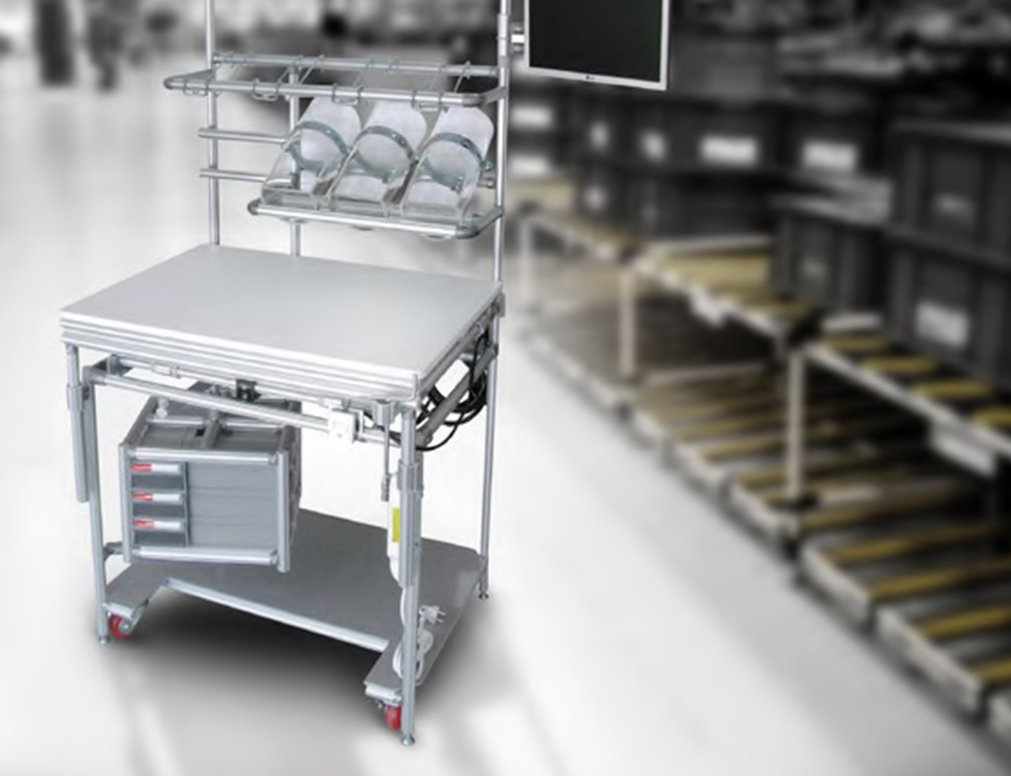
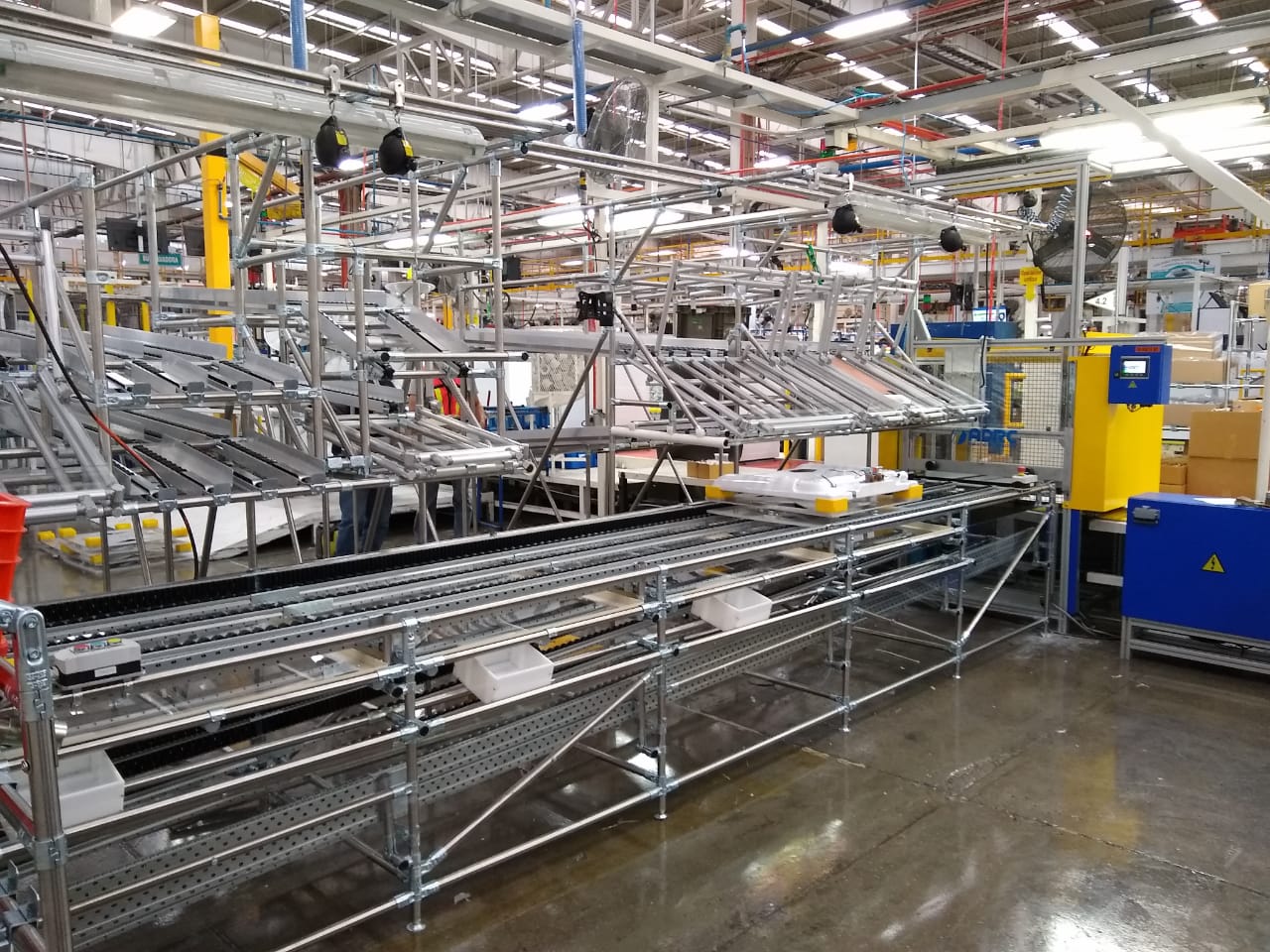
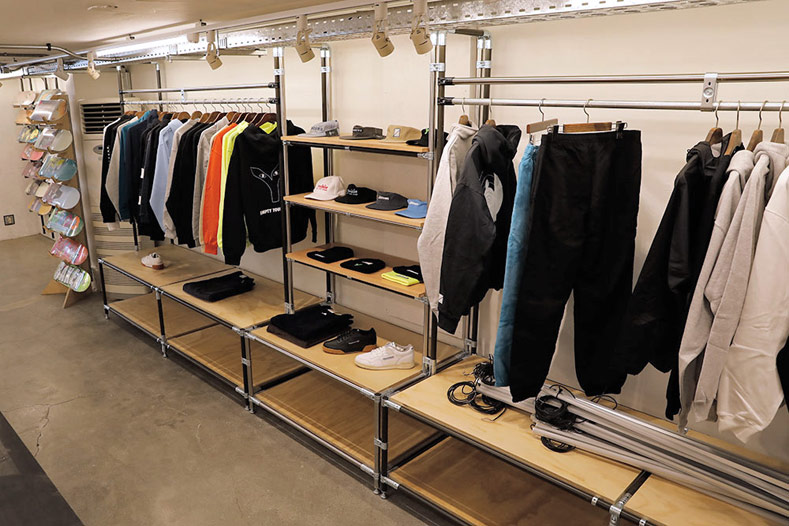
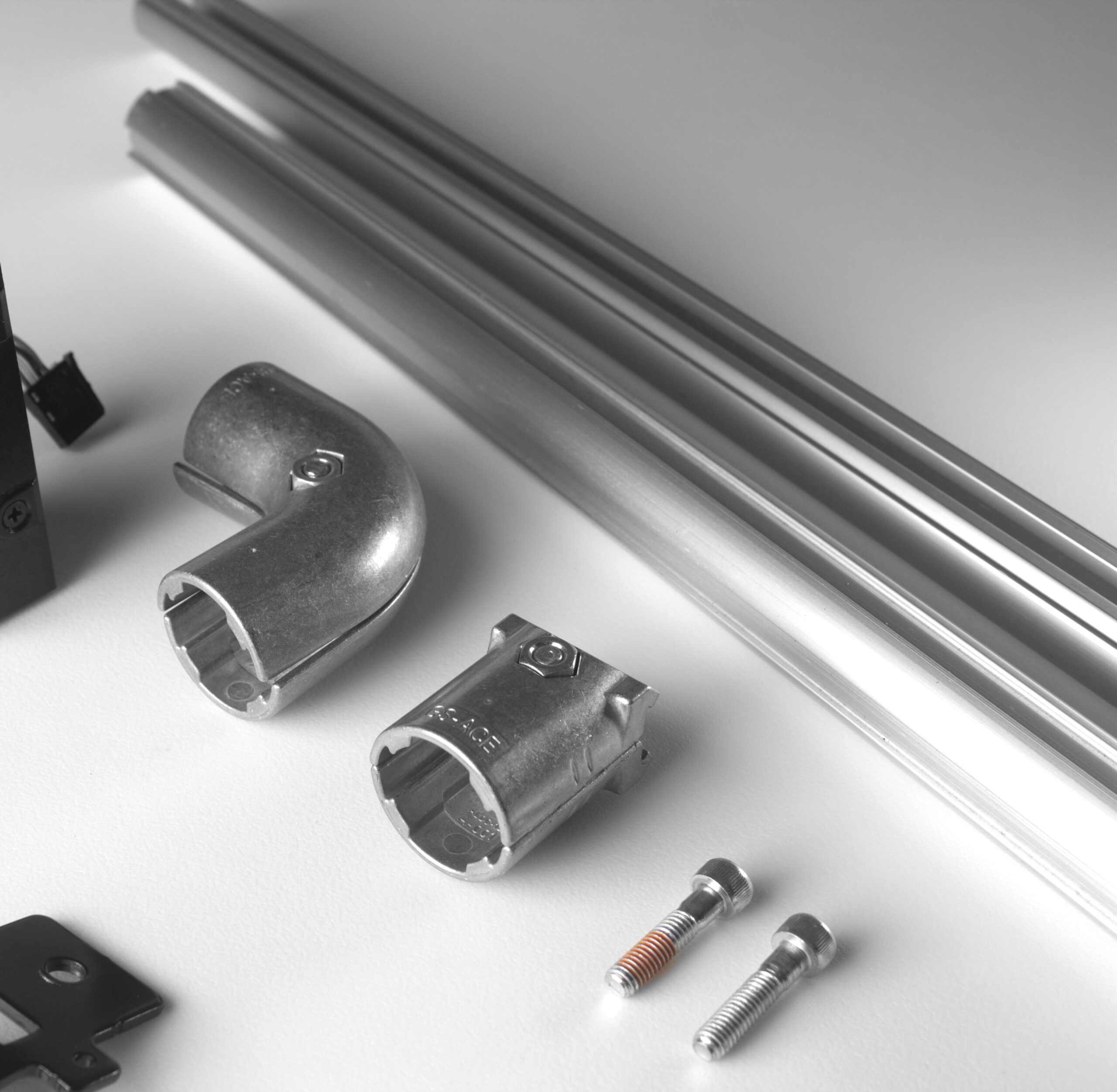
AMS introduces a new revolutionary Aluminum Racking System to compliment our current product offerings.

  • Robots used in manufacturing create efficiencies all the way from raw material handling to finished product packing.
  • Robots can be programmed to operate 24/7 in lights-out situations for continuous production.
  • Robotic equipment is highly flexible and can be customized to perform even complex functions.
  • With robotics in greater use today than ever, manufacturers increasingly need to embrace automation to stay competitive.
  • Automation can be highly cost-effective for nearly every size of company, including small shops.
jacking robot vid thumb

Accessorize your AMR units

  • Automatic Charging Unit*
  • FMS (Fleet Management System)
  • Loading Dock*
  • Mapping Robot*
  • SLAM (Simultaneous Localization and Mapping)

*Available as add-on

Autonomous Mobile Robots (AMR)

AMR robots, or Autonomous Mobile Robots, are intelligent vehicles used for transporting loads across various environments and sectors, including logistics, warehouses, automotive industries, and manufacturing, among other industrial settings. These advanced robots are designed to navigate dynamically within complex workplaces without human intervention, offering versatile solutions to modern logistical and operational challenges.

Advantages of AMR Robots

AGV Robots

  • Predefined Paths: AGV robots operate along predetermined routes, making them less versatile than AMRs.

  • Limited Adaptability: AGVs require a fixed infrastructure and have a limited ability to adapt to changing environments.

  • Fixed Routes: Typically used in traditional production and material transport settings, AGVs follow fixed paths.

  • Common Environments: AGVs are more common in environments with a controlled layout, where their limited adaptability is less of an issue.

AMR Robots

  • Free Navigation: AMRs navigate freely, allowing them to perform dynamically and adapt to real-time changes in their environment.

  • Versatile Task Execution: AMR robots can undertake multiple tasks, adapting fluidly to their surroundings while interacting intelligently.

  • Real-Time Interaction: By detecting and avoiding obstacles dynamically, AMRs ensure enhanced operational efficiency and safety.

  • Wide Application: AMRs are ideal for logistics, distribution, and a variety of industrial applications where adaptability and smart navigation are crucial.

Types of AMR Robots

amr stacking robot in factory

AMR for Material Transport

Designed to move goods within warehouses or factories, these AMR robots optimize internal logistics by seamlessly transporting materials between stations, thus enhancing efficiency and reducing manual handling.
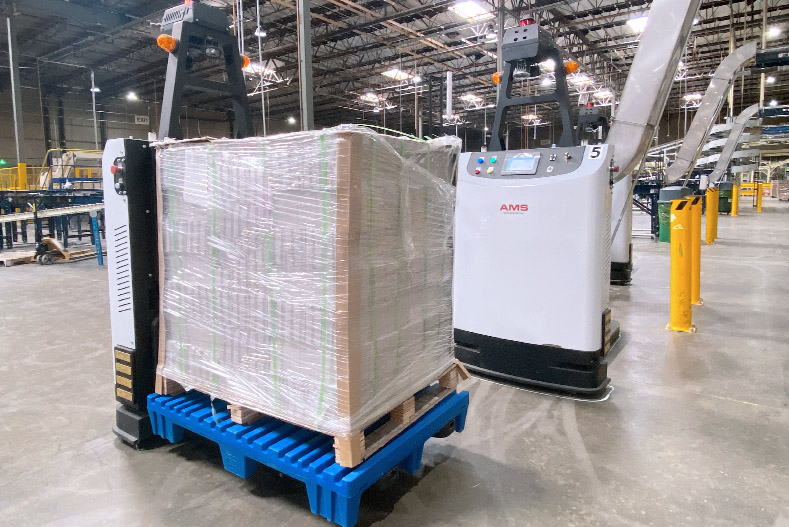
pallet stacker 03

AMR for Order Picking

Specialized AMRs assist with selecting and picking products, significantly improving order processing efficiency. These robots streamline workflow and reduce picking errors, enhancing overall fulfillment accuracy.
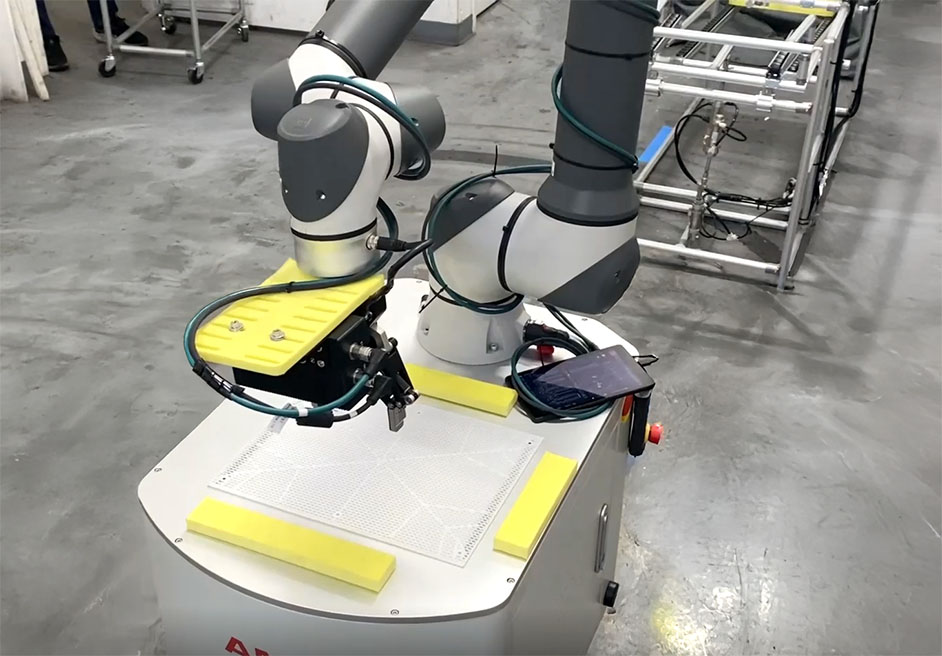
operabo on a factory setting

Mobile Cobot (Operabo)

Specialized AMRs assist with selecting and picking products, significantly improving order processing efficiency. These robots streamline workflow and reduce picking errors, enhancing overall fulfillment accuracy.
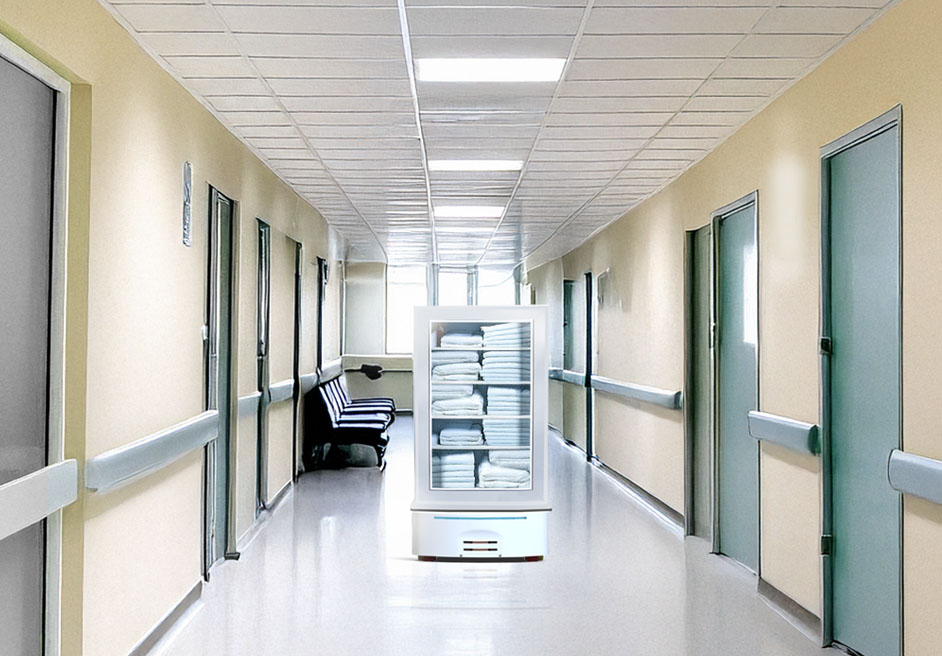
mobile base robot medical

AMR for Healthcare Environments

In healthcare settings, AMR robots facilitate the transportation of medical supplies, medications, and equipment throughout hospitals, improving internal logistics and allowing healthcare professionals to focus on patient care.
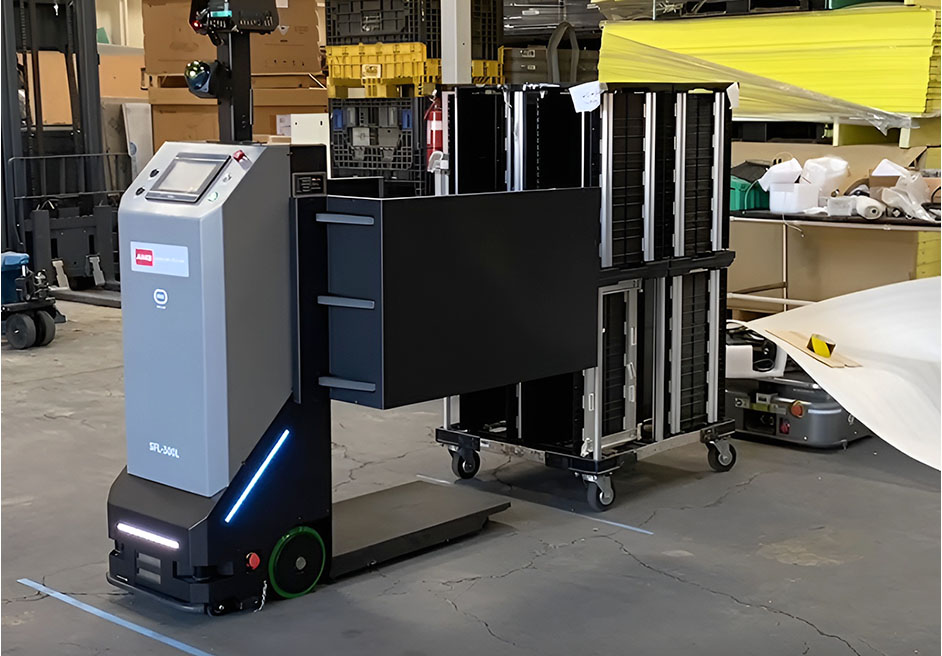
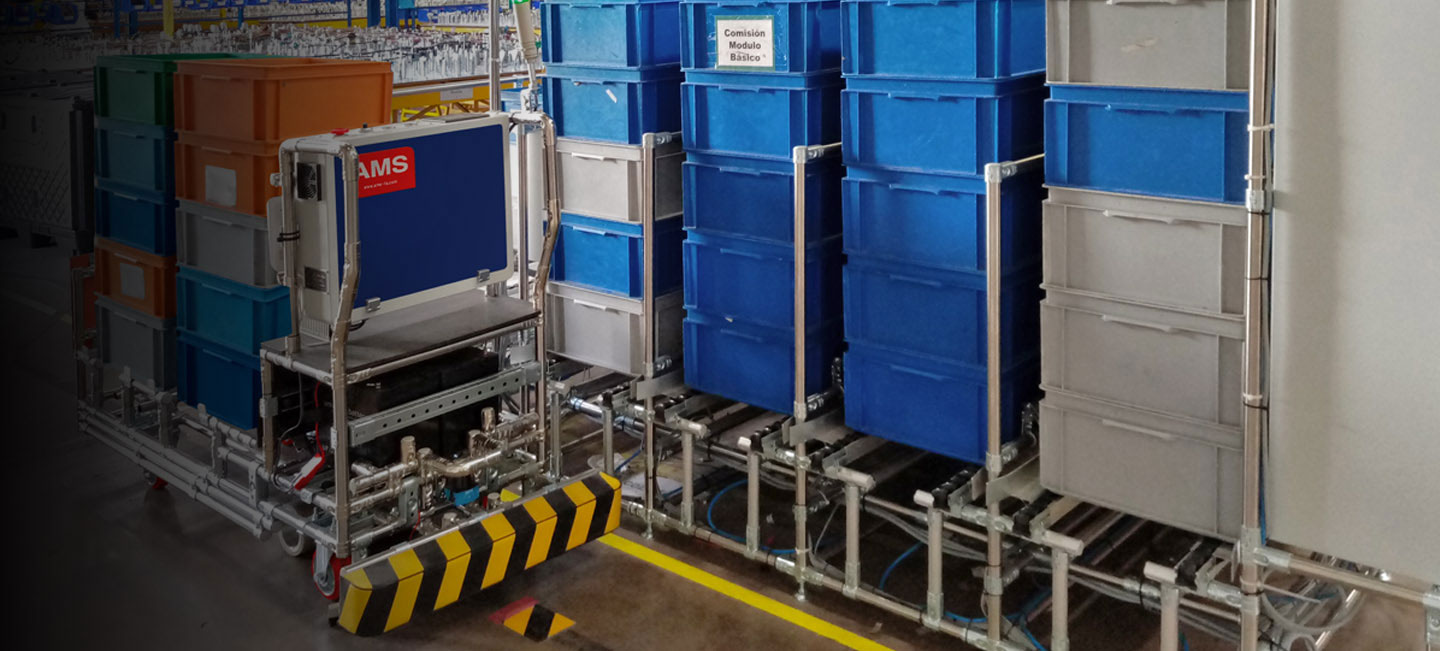
magazine rack in plant

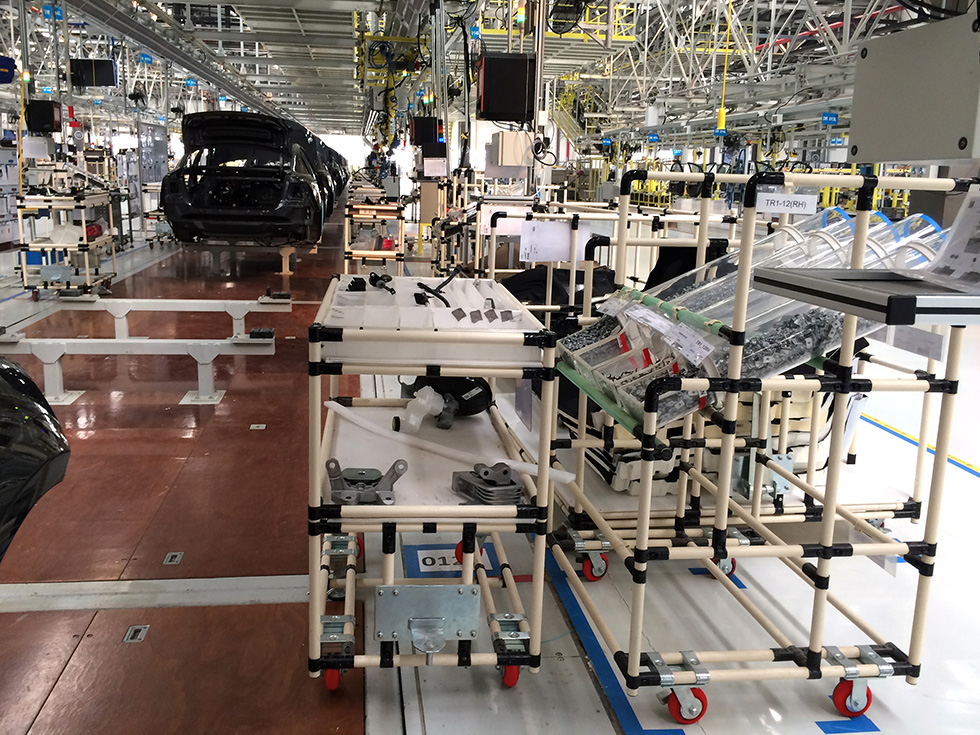
AMR for Manufacturing

AMR robots support and assist manufacturing processes by moving parts or products between workstations. Their integration into production lines helps optimize workflow, reduce downtime, and improve productivity.
Custom or Specialized AMR

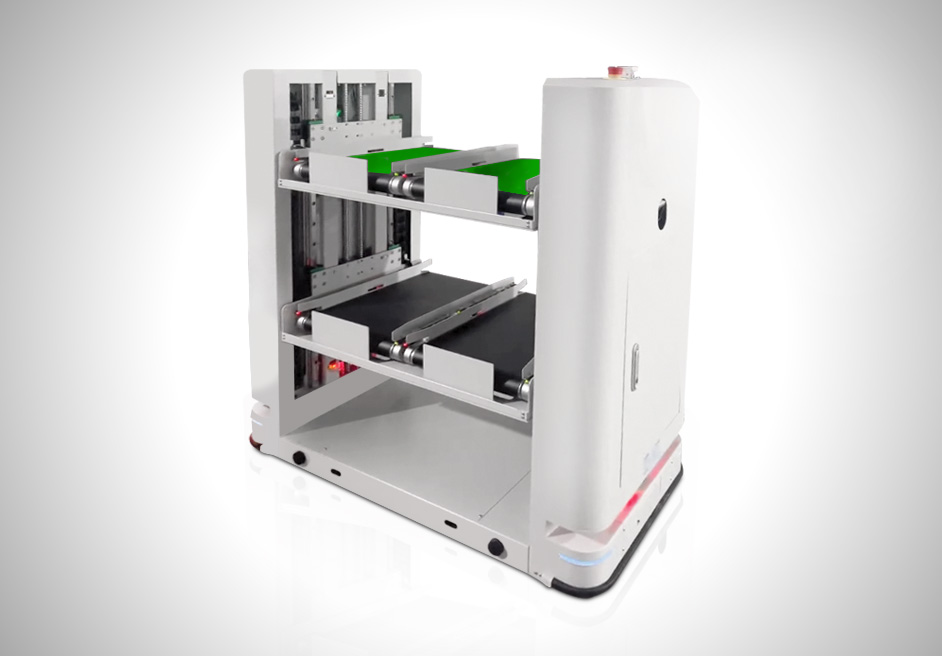
AMR robots can be customized for specific tasks or unique industrial sectors, tailored to meet the precise needs of customers. Their adaptability makes them ideal for a wide range of applications, ensuring effective solutions for diverse operational requirements.

hybrid amr

Features of AMR Robots

flexibility icon

Flexibility

AMR robots can reconfigure their routes and adjust to new requirements without interrupting operations, making them highly adaptable to changes and capable of functioning efficiently in any environment.

reliability icon

Reliability

With the ability to operate consistently and faultlessly for extended periods, AMR robots minimize downtime. Their advanced sensor and navigation systems ensure precise and safe operation.

adaptability icon

Adaptability

AMR robots are adept at adjusting to different environments and tasks without the need to reconfigure existing infrastructure. This adaptability supports a wide range of applications, from logistics to manufacturing.

autonomous icon

Autonomy

Utilizing advanced cameras and AI algorithms, AMR robots move autonomously without human intervention. They optimize routes in real-time to avoid obstacles and improve efficiency.

How Do AMR Robots Work?

AMR robots incorporate cameras, sensors, and laser scanners to read and interpret their surrounding environment. A sophisticated software system controls these robots, mapping optimal routes in real-time within their navigation framework. By planning their paths and optimizing their trajectories, AMR robots enhance efficiency, reduce travel time, and manage traffic within operational areas.

Autonomous Robots in Modern Warehouses and Factories

towing agv carts scaled

Autonomous robots are transforming how materials move inside warehouses, distribution centers, and manufacturing plants. By combining onboard sensing with real-time decision-making, autonomous robots can operate in dynamic environments where people, pallets, and vehicles share the same space. This ability to navigate and react without fixed infrastructure makes them a practical automation layer for facilities that need flexibility and fast deployment.

pallet stacker 03

Many operations start with a limited fleet and expand over time as processes stabilize and ROI becomes clear. Because autonomous robots can be introduced in phases, they are often used to modernize intralogistics without redesigning the entire building. When paired with the right software and change management, autonomous robots help reduce travel time, improve consistency, and support higher throughput.
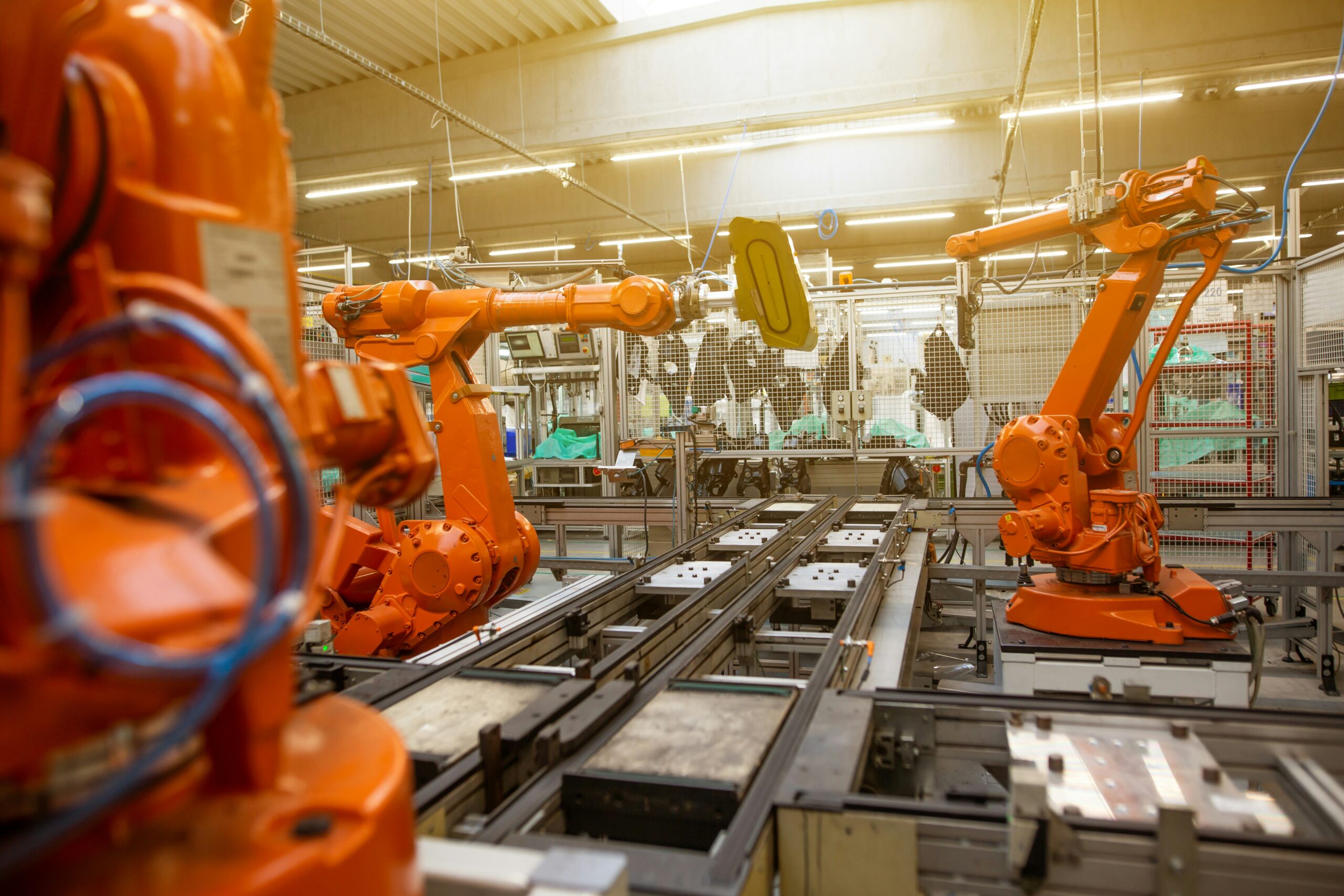
photo 1647427060118 4911c9821b82 scaled

Productivity and Throughput Improvements

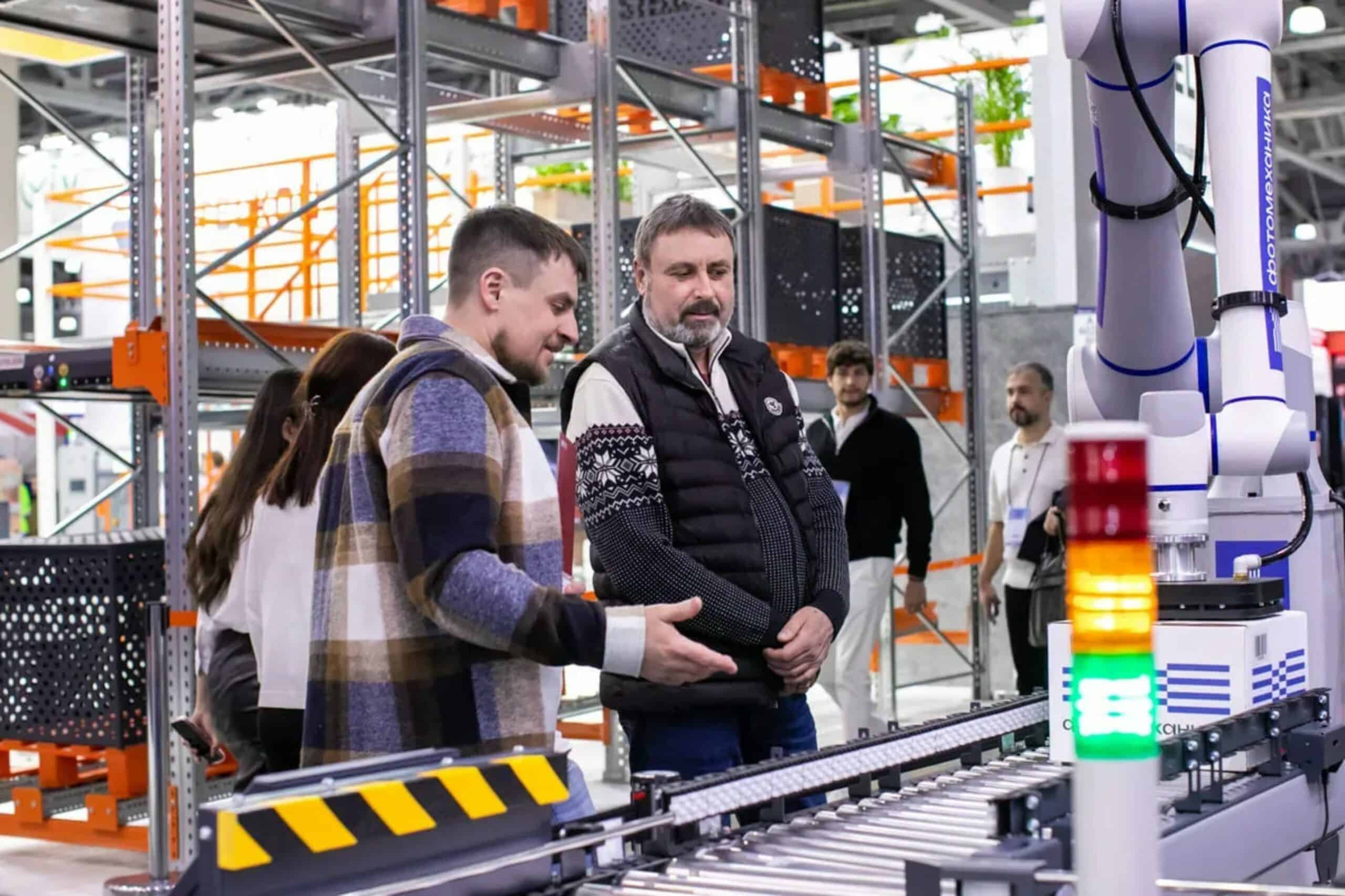
Autonomous robots can run repetitive transport missions with consistent performance, helping reduce delays between picking, packing, staging, and shipping. By keeping workstations supplied and removing internal transport as a constraint, they can improve flow and reduce idle time. Many sites measure impact through metrics like picks per hour, order cycle time, and dock-to-stock time.
featured image scaled

Safety in Mixed Human-Robot Environments

Because autonomous robots detect obstacles and adjust behavior, they are designed to operate near people when deployed correctly. Common safety strategies include reduced-speed zones, controlled intersection behaviors, and geofenced areas where robots must request permission or follow stricter rules. A well-planned deployment includes signage, training, and clear traffic policies to keep interaction predictable.

magazine rack in plant

Autonomous Robots vs. Traditional Automation

Traditional automation typically depends on predefined routes, fixed conveyors, or guided paths that require physical changes to the site. Autonomous robots, by contrast, rely on perception and mapping to plan routes, avoid obstacles, and adapt to temporary changes like blocked aisles or shifting inventory. This difference matters in facilities where layouts change often or where peak seasons require rapid adjustments.
AMR robots from AMS, Inc.

Exemplify the pinnacle of modern automation, offering unparalleled flexibility, efficiency, and safety for diverse industrial settings. With expert solutions tailored to your unique needs, AMS, Inc. provides cutting-edge AMR technology designed to streamline operations and optimize productivity across your enterprise.

Search

Get Your Quote

Interested in our products? Send us a message and we will get in touch with your shortly.

×
img

    Get In Touch

    Contact Info

    PHONE NUMBER

    +1 (619) 661-5985

    EMAIL ADDRESS

    ams@ams-fa.com

    ADDRESS INFO

    10030 Via de la Amistad San Diego CA 92154, United States