How a robotic arm can automate repetitive assembly tasks
Table of contents
In modern manufacturing, operational throughput and assembly consistency dictate competitive advantage. As production volumes scale and labor availability fluctuates, facility managers face continuous pressure to eliminate bottlenecks on the plant floor. Robotic arms have emerged as an essential technology to resolve these production constraints. By deploying robotic manipulation to automate repetitive assembly tasks, manufacturing facilities maintain consistent cycle times while reallocating human capital toward technical oversight and process improvement.
Transitioning manual operations into automated workflows involves more than raw mechanical speed. It establishes process predictability, removes human fatigue variables, and stabilizes overall product quality.
The role of articulated arms in modern assembly
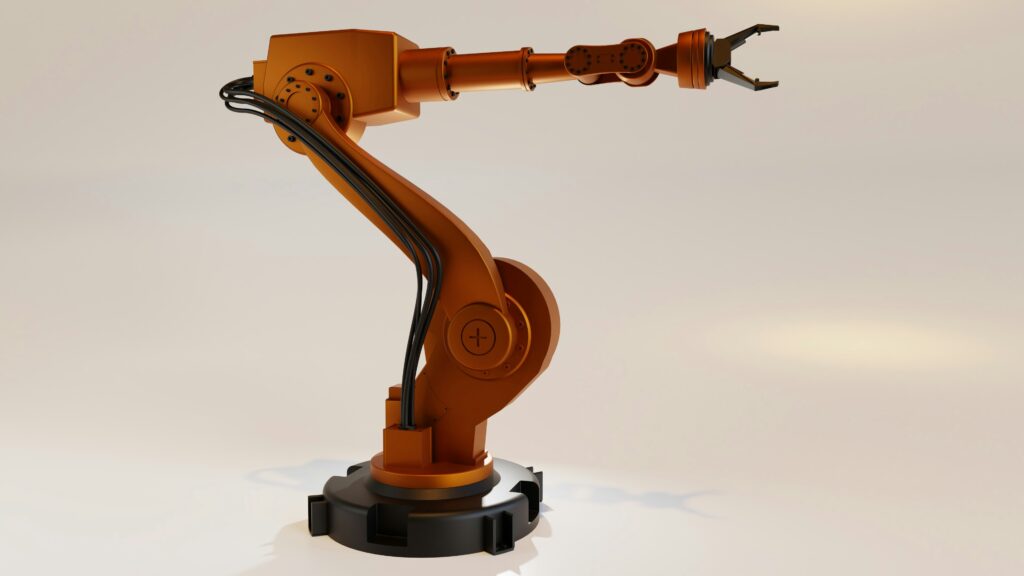
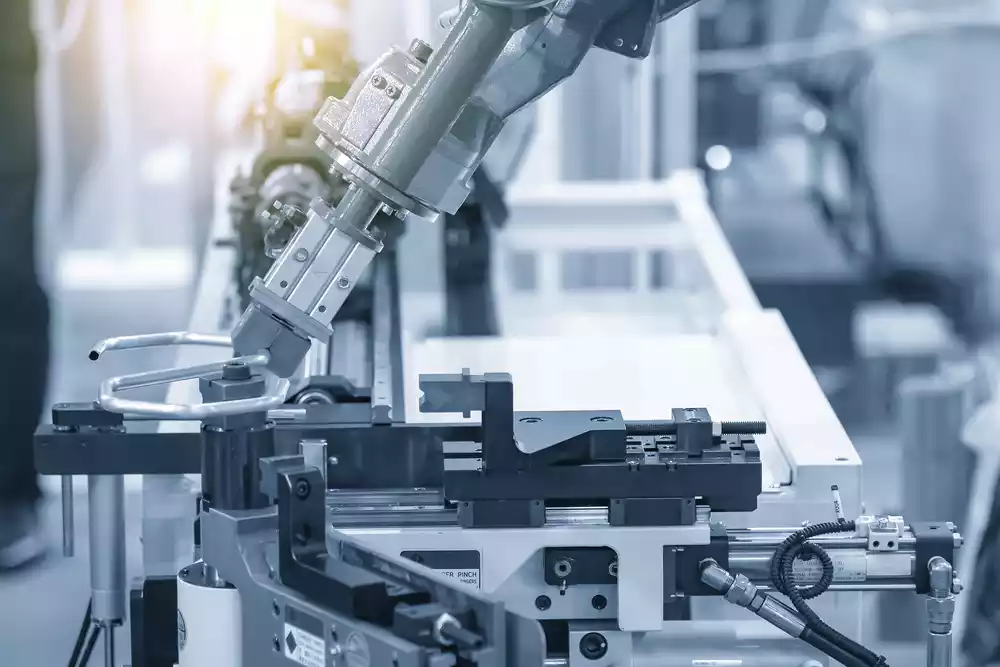
Assembly environments require rapid execution paired with microscopic tolerance control. Articulated robotic manipulators replicate human arm kinetics using multi-axis joints, servo actuators, and digital control loops. Equipped with specialized end-of-arm tooling (EOAT), such as pneumatic parallel grippers, vacuum suction arrays, and compliance sensors, these systems execute complex handling and fastening sequences with total mechanical fidelity.
Integrating multi-axis machinery to automate repetitive assembly tasks allows facilities to handle diverse component geometries without retooling an entire line. Whether handling delicate circuit board inserts or torquing automotive chassis fasteners, robotic manipulators adjust to fluctuating batch volumes through rapid software switching. This architectural adaptability makes robotic workcells a standard foundation across discrete manufacturing sectors.
Core operational advantages of automated assembly
Transitioning from manual labor to automated robotic workcells resolves fundamental manufacturing challenges across throughput, ergonomics, and scrap generation.
Elevated throughput and predictable cycle times
Human operators inevitably experience physical fatigue, micro-distractions, and ergonomic strain during extended shifts. In contrast, an articulated mechanical arm operates at constant velocity across multi-shift production schedules. Facilities that deploy robotic technology to automate repetitive assembly tasks secure reliable takt times and eliminate mid-shift production lulls, delivering predictable hourly output models.
Micron-level repeatability and defect reduction
Manual insertion, screw driving, and adhesive dispensing carry inherent risk of operator variance. A moment of misalignment can cause cross-threading, broken component tabs, or uneven bonding seals. Industrial manipulators maintain positional repeatability down to fractions of a millimeter. When production teams automate repetitive assembly tasks, reject rates plummet because every screw, clip, and weld pin receives uniform torque and placement force.
Substantial reduction in long-term operating costs
While mechanical integration requires upfront capital expenditure, amortized equipment costs deliver decisive return on investment. Replacing high-turnover manual stations with mechanical systems reduces labor recruiting, onboarding downtime, and workers’ compensation claims related to repetitive strain injuries (RSIs). Long-term operational data confirms that companies choosing to automate repetitive assembly tasks lower cost-per-unit metrics within the first 12 to 18 months of deployment.
Anatomy and mechanics of an assembly robot
Understanding how mechanical linkages, sensory networks, and software logic interact clarifies why articulated arms excel at modern line work.
High-resolution servo actuators and harmonized joints
Each rotational joint in a manipulator houses a brushless AC servomotor paired with strain-wave gearing and absolute optical encoders. This mechanical architecture delivers immense holding torque alongside smooth acceleration profiles. When engineering workcells to automate repetitive assembly tasks, these actuators enable smooth trajectory interpolation, ensuring delicate electronic boards or fragile glass lenses avoid shock impact during rapid transit.
Machine vision and force-torque sensing
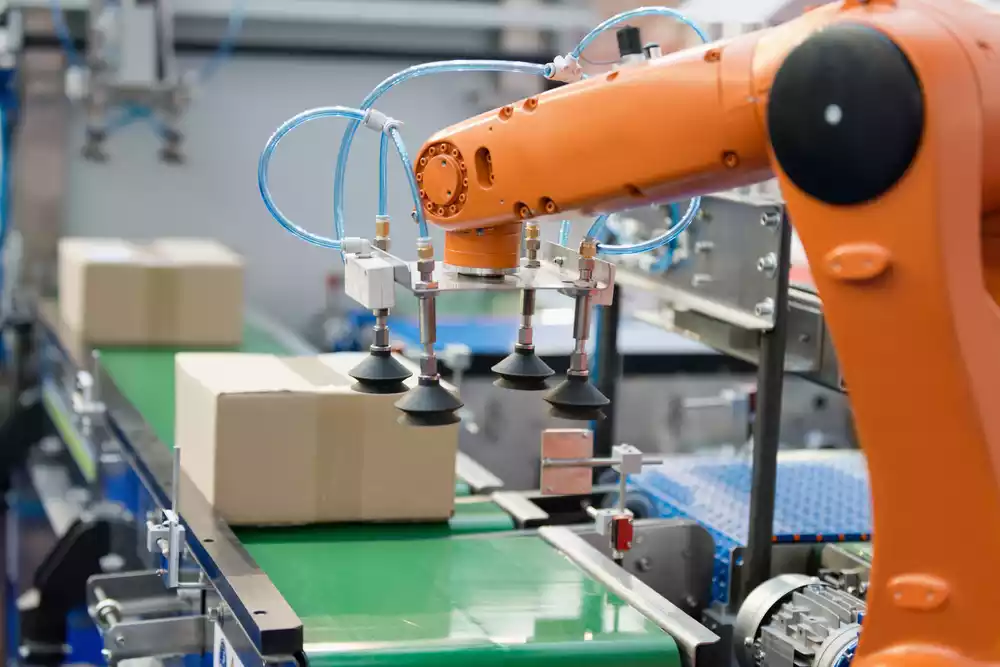
Modern robotic integration relies heavily on sensory feedback loops. Six-axis force-torque sensors mounted at the wrist flange measure external resistance in real time during mating operations. Coupled with 2D and 3D industrial vision cameras, the robot can identify part orientation on a moving conveyor belt, adjust pickup angles dynamically, and verify successful snap-fit insertions. These sensory inputs enable systems to automate repetitive assembly tasks even when input parts lack rigid tray positioning.
Critical industrial applications
Robotic assembly manipulators serve across major manufacturing sectors, each demanding specific speed, payload, and cleanroom requirements.
Automotive sub-assembly and tier-1 suppliers
Automotive manufacturing demands zero-defect compliance under tight delivery schedules. Production lines use multi-axis systems to automate repetitive assembly tasks including instrument panel wiring harness routing, door latch hardware installation, weatherstrip seating, and engine head bolt fastening. Continuous robotic operation ensures every component adheres to strict federal safety and torque specifications.
Electronics and micro-component manufacturing
Printed circuit board (PCB) assembly requires microscopic precision that challenges human manual dexterity. Robotic arms equipped with micro-vacuum grippers mount chips, press micro-switches into housings, apply precise thermal paste beads, and seat fragile ribbon cables. Electronics manufacturers regularly automate repetitive assembly tasks to protect fragile semiconductors from electrostatic discharge (ESD) and physical handling damage.
Medical device assembly and cleanroom packaging
The medical sector enforces strict traceability and contamination regulations. Sealed robotic systems operating in ISO-certified cleanrooms assemble diagnostic cartridges, catheter manifolds, and syringe mechanisms. Cleanroom-rated manipulators allow biomedical plants to automate repetitive assembly tasks without risking particulate contamination from human contact.
Implementation considerations for plant managers
Integrating automated workcells into existing plant footprints requires disciplined technical planning across several primary domains:
- Footprint and safety guarding: Traditional high-payload industrial robots demand protective perimeter cages, light curtains, and safety interlocks that consume valuable floor space.
- Programming overhead and tooling flexibility: Facilities handling high-mix, low-volume (HMLV) batches require systems that support rapid recipe reconfiguration rather than weeks of complex PLC ladder logic updates.
- Workforce enablement and upskilling: Line technicians must be trained to supervise automated stations, manage routine calibrations, and maintain mechanical grippers without relying exclusively on third-party engineering contractors.
Addressing these technical requirements determines whether a facility achieves rapid operational payback when seeking to automate repetitive assembly tasks.
Why partner with AMS, Inc. for assembly automation
Transitioning to automated assembly does not require complex industrial disruption. AMS, Inc. specializes in delivering accessible, practical collaborative robotic solutions designed to solve modern manufacturing bottlenecks.
Adaptable automation for existing workspaces
Unlike massive legacy systems that demand complete plant reconfigurations, cobot arms from AMS, Inc. are built for compact deployment. Their ergonomic footprint allows facilities to introduce automation directly into existing workstations without displacing critical floor operations.
Practical deployment and fast operator adoption
AMS, Inc. focuses on intuitive implementation. With user-friendly programming interfaces and guided setup, shop-floor teams can adapt equipment to new assembly routines quickly, minimizing line downtime and keeping high-mix production schedules on track.
Dedicated support for your production goals
Automating with AMS, Inc. means working with a partner committed to your operational success. From initial evaluation to deployment, our team helps you identify the right tooling and configuration to automate repetitive assembly tasks, reduce cycle errors, and maximize your return on investment.
Contact AMS, Inc. today to discuss your assembly line requirements and discover how our collaborative robotics solutions can streamline your operations.
Recent posts
Where we are located
Our operations are international, however, our main branch is conveniently located in San Diego, California. It is close to one of the busiest international borders in the world.
We look beyond the scope to surpass your expectations
We understand the importance of retaining a strong working relationship with our customers. AMS provides a niche for everyone through excellent customer care and top-rank products.